photos and graphic courtesy
*times of India newspaper/media releases
*Prasanta Bhowmick
*Ujjawal Puri
*MMRDA media releases
*Internet
*Pexels.com
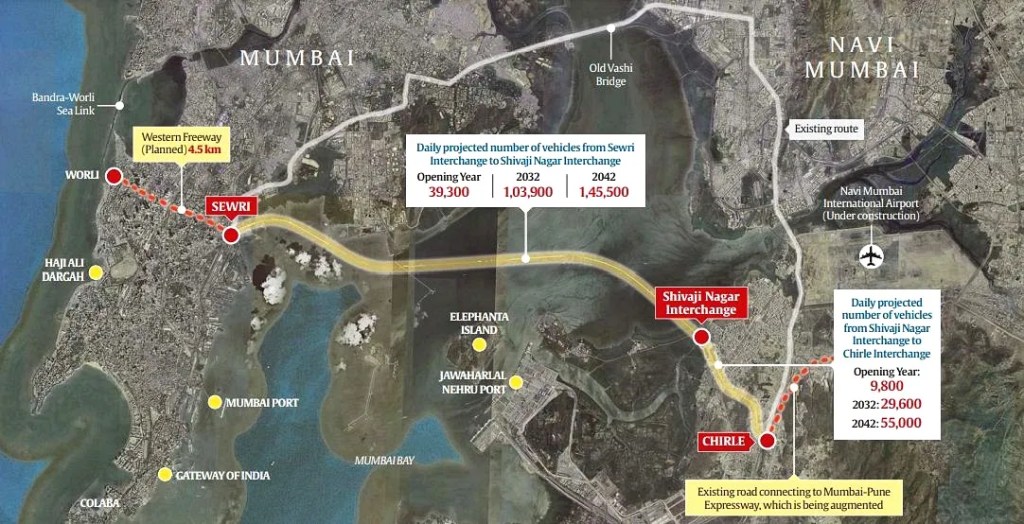
A marathon on the newly built Nhava Sheva to Mumbai sea link
The front-page advertisement in the Times Of India is too tempting.

The inner voice raises the obvious question
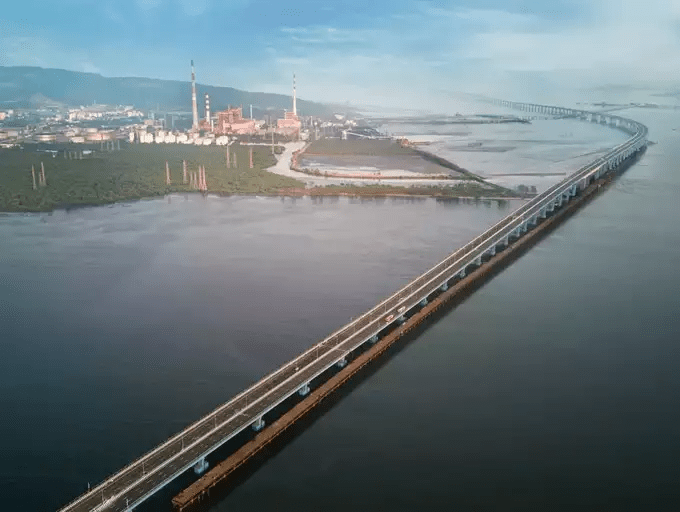
“Should we miss the chance of a lifetime – to be part of the lucky runners who will be the first to run on the newly opened 21.8 km sea link which is the longest sea link in India?” {and the world’s 12th longest}
The answer is obvious
NO.
The first edition is always the first edition.
I talk to Sheila. There is a yes from her end as well, however, there is confusion in the runners’ group about the surety of the run.
“They may not get the required clearances, etc.” is the kind of talk that prevails within the running community, thankfully this kind of chatter does not matter at the level at which the marathon is being planned!)
Who on earth would announce such a big event on the 1st page of India’s Biggest Newspaper: The Times Of India and not conduct the marathon?
I go ahead with the bookings.
Yes, this out-of-the-world opportunity came out of the blue.
We have already committed to the 21.1 km (half marathon) Juhu Marathon on Sunday, 25th Feb 2024
So, the announcement by L & T for the L & T Sea Bridge Marathon 2024 is inherently challenging for the runners’ community and more so, for the organizers.
Good events need sufficient time for the best rollouts.
As a project-loving person, I can sense the urgency and 11th-hour undercurrents of this unique marathon event.
Since we have enrolled only for 10 Km, I am not very worried about my hectic three days of travel to the Eastern Part of India.
I can fit in only one Gym-lower body session this week and no run during the week.
A little cough remains my companion for most of the week. (This shows up later during the run. I can see the clear imbalance between my cardiovascular deliverance vis a vis muscle strength and endurance. After a long gap I could see issues with my O2 delivery even when my legs and mind were asking me to push more)


The race day:
Rajesh Iyer is kind enough to take his car and even offers to pick us up from our housing complex.
We have kept a margin and luckily, we reach in time.
The facilities are quite good (seeing the time period they had).
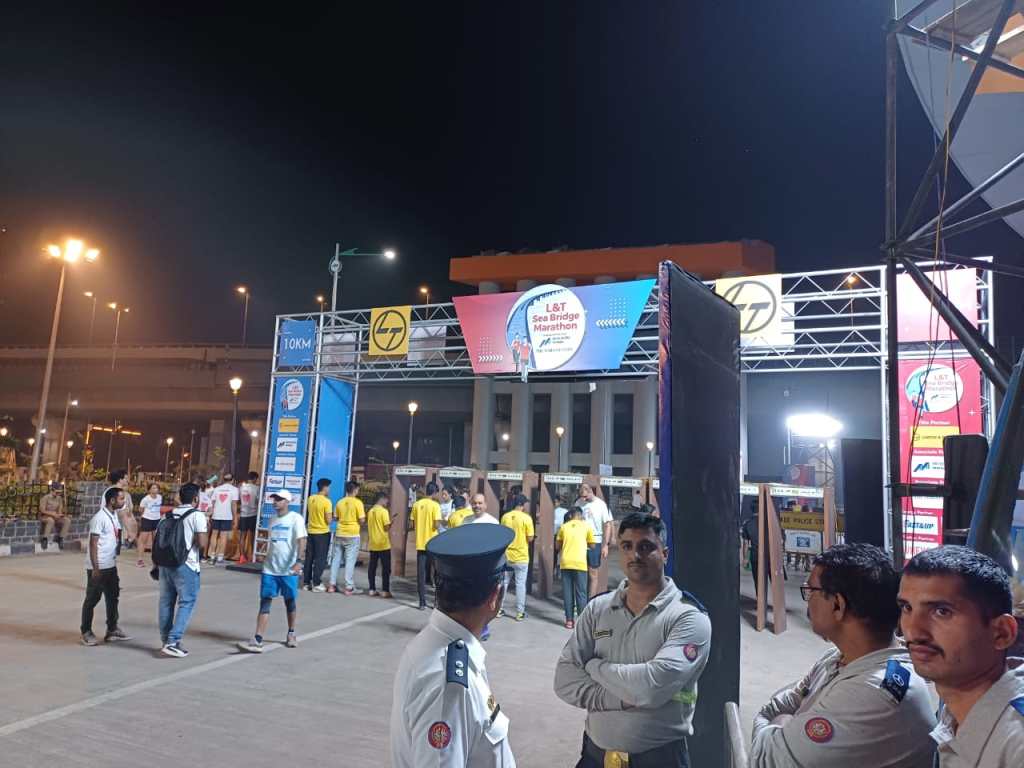
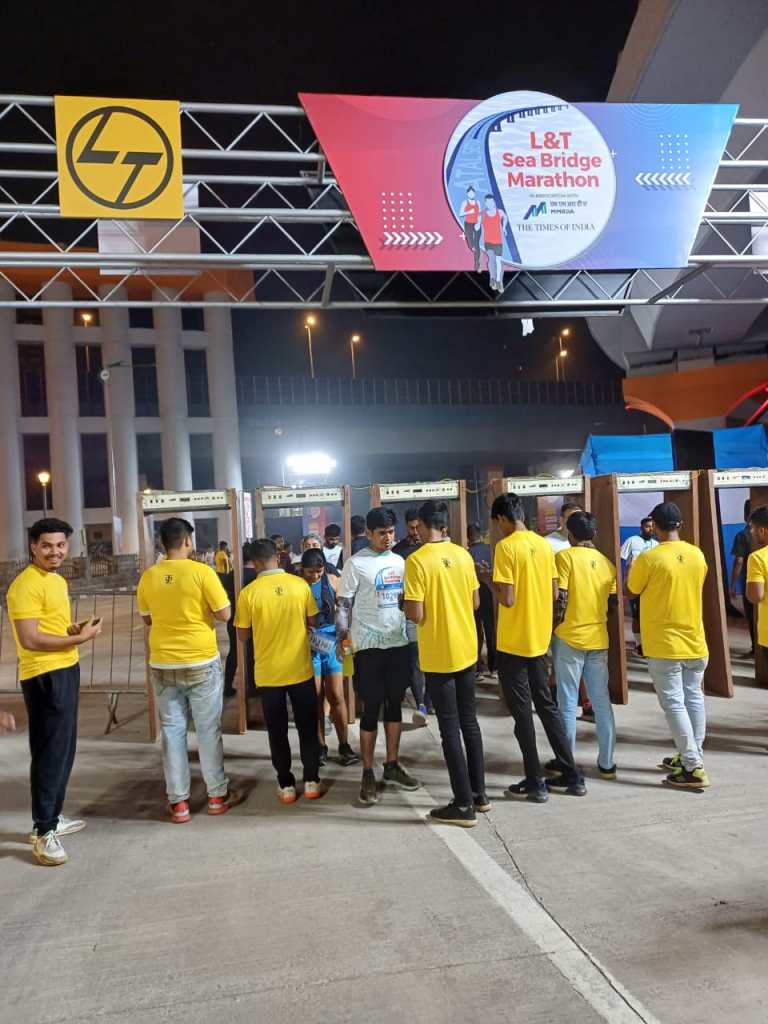
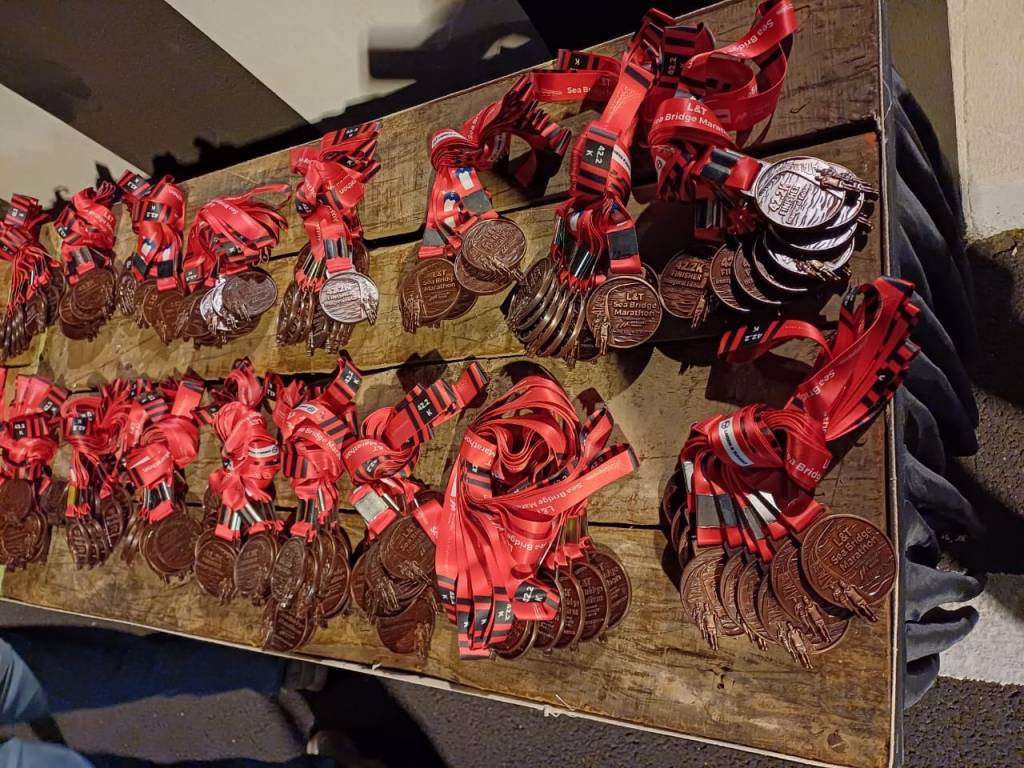
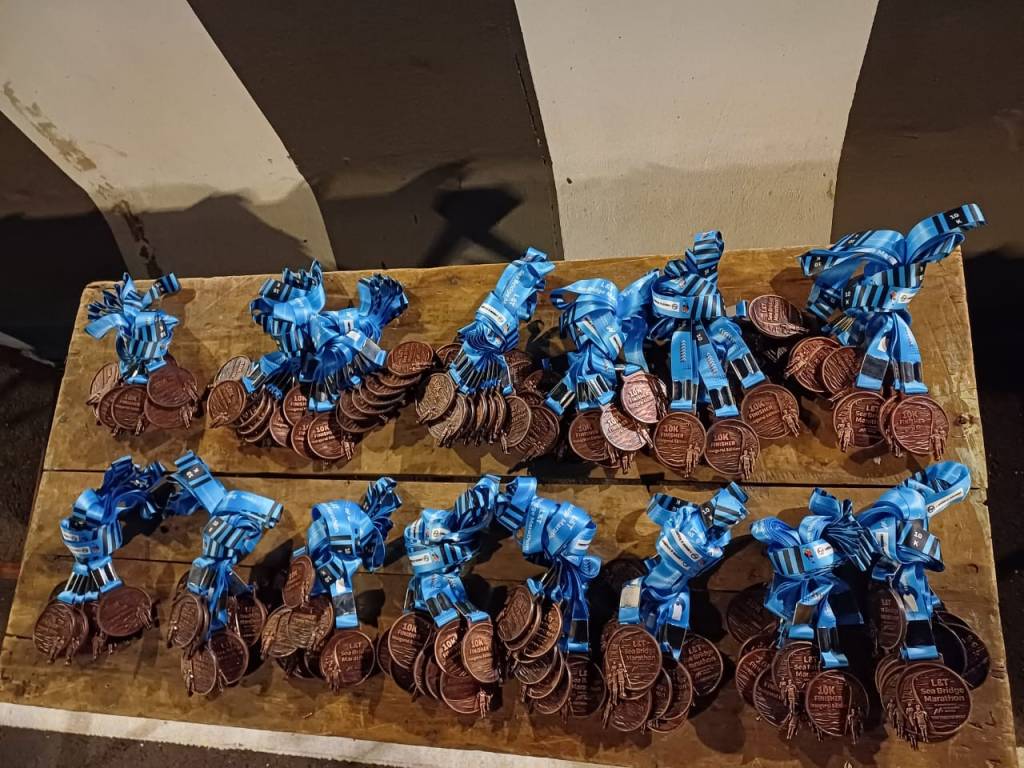
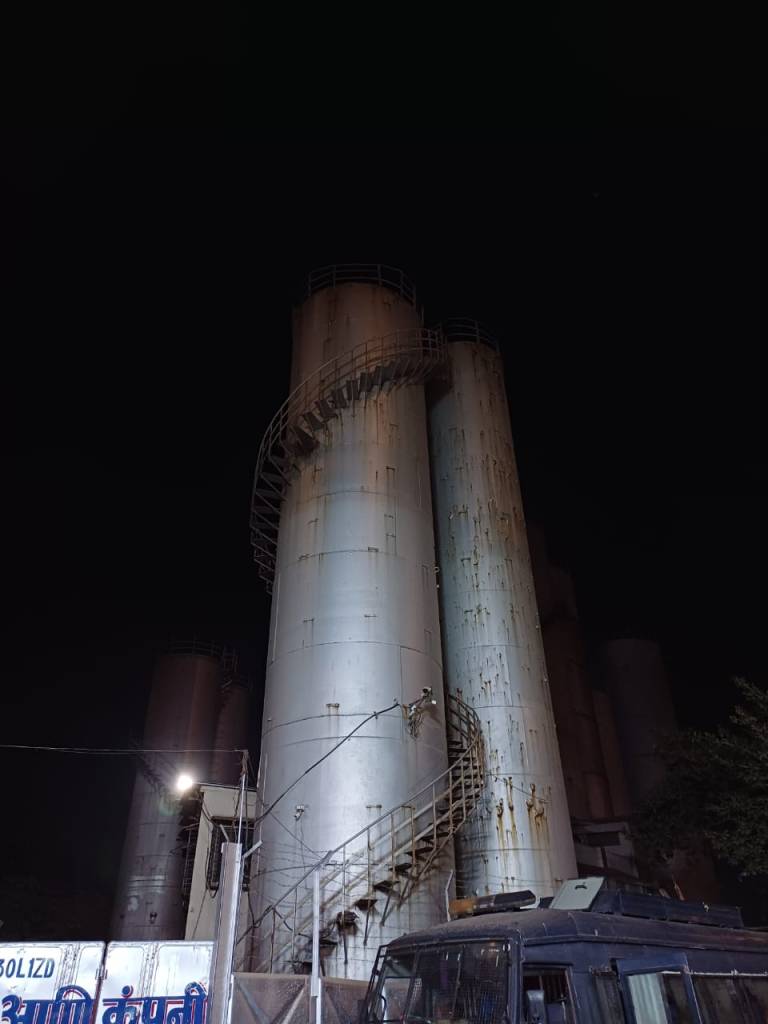
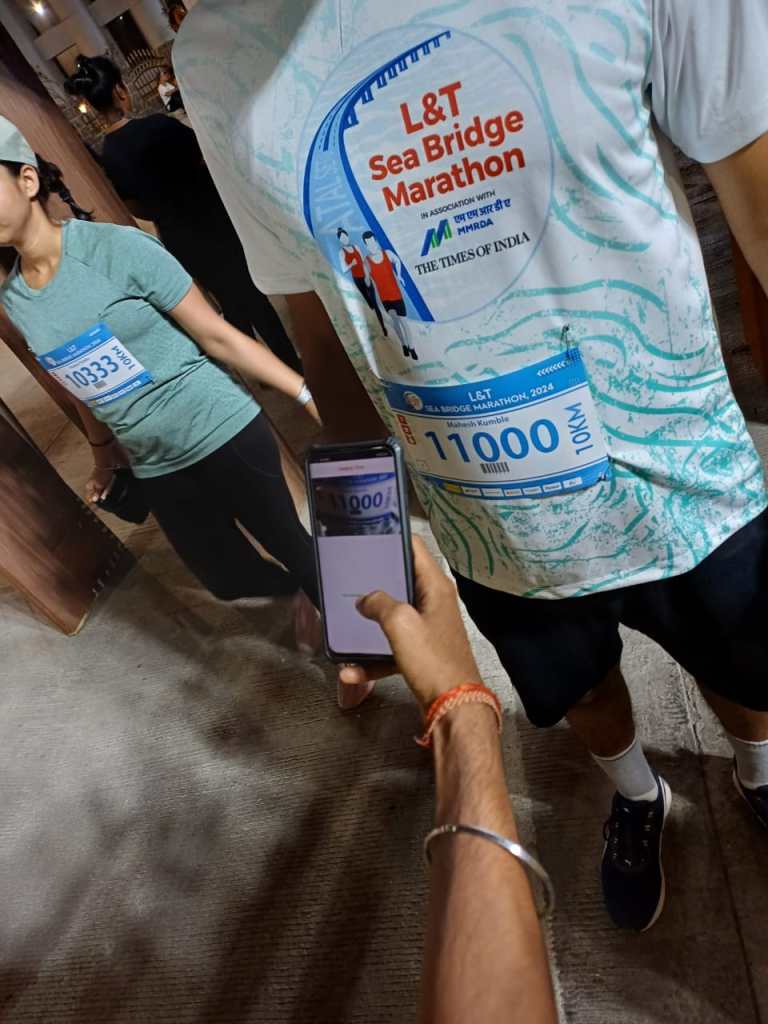
The combination of BPT road (Bombay Port Trust Road), the eastern Freeway and the new sea link does not offer you an ideal location to create the required space for a conventional marathon. But this is a unique race. We do get a parking space. Temporary loos offer immediate relief
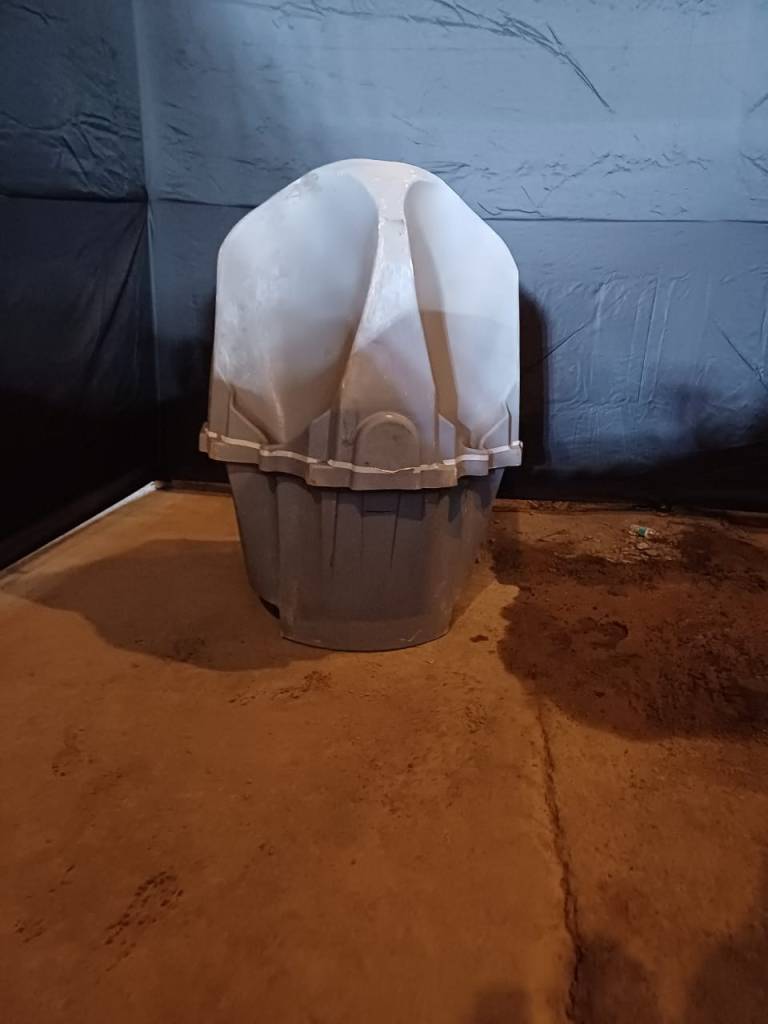
but are missed very much, later as the start point is 700 m away. Unlike Bandra Sea Link which annually witnesses
“Parade bladder khali karenge, khali karo! kind of tragi-comedy (male runners en-mass emptying their bladders on one side of the Bandra Worli sea link)
This new sea link just doesn’t offer any space once you are ON it.
This Six-lane (27 meters in width) sea link has four categories of races
The up lanes (coming from Nhava Sheva to south Mumbai) are for 21.1 km and 5 km runners

The down lanes (going from south Mumbai/Bombay port trust side to Nhava Sheva are given to 42.2 km and 10 km runners.
Our race starts at 6.30 am. We have ample time.
The stage is unique. It has two sides, each facing Up & Down lanes. We can witness the 6.00 am flag-off of the 21.1km race.
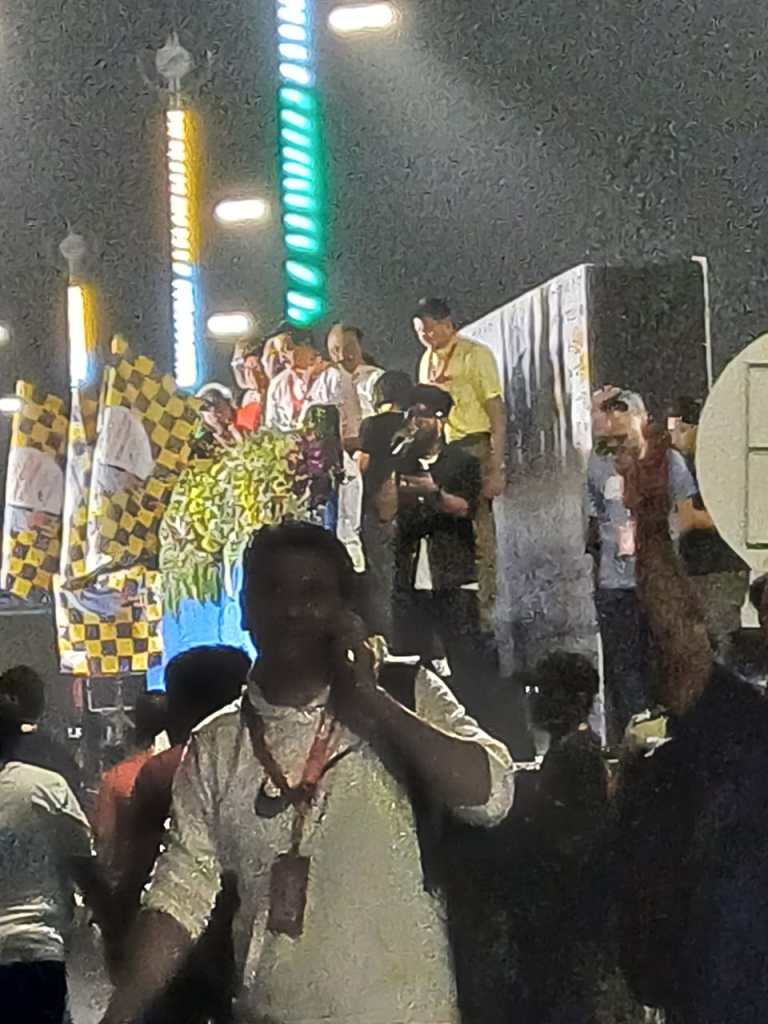
Soon the players on the stage change sides and face us. The flag-off ceremony is a kind of compulsion in every marathon.
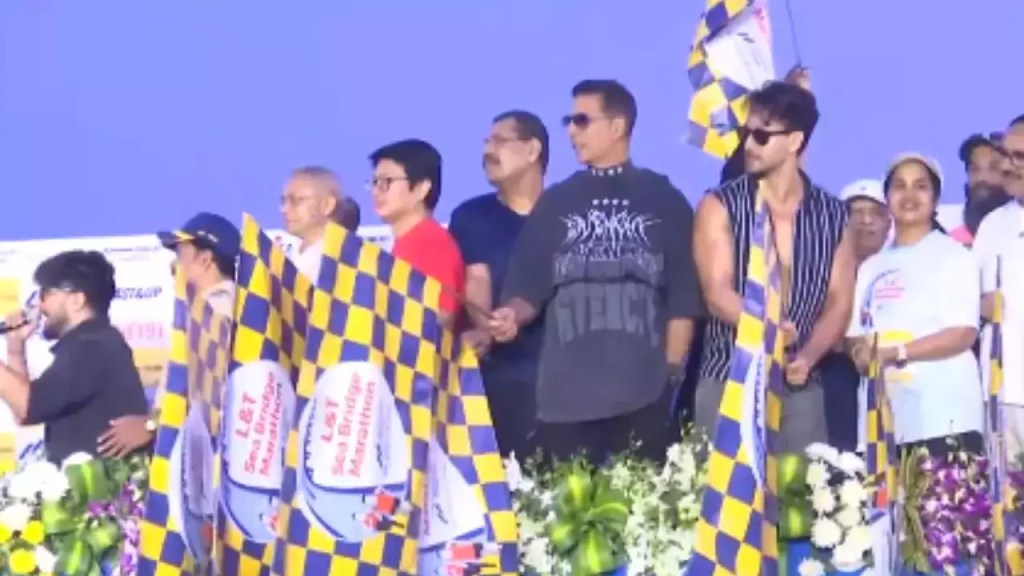
The obvious constraint: Not many can occupy the start zone and see the celebrities who were somehow cajoled to reach at weird hours, not to run; but wave some weird flag.
The glamour-struck runners hardly get any darshan in half dark, half fully lit set up. The darshan time is less as you have to run-walk, cross the timing mat, and do elbow fights
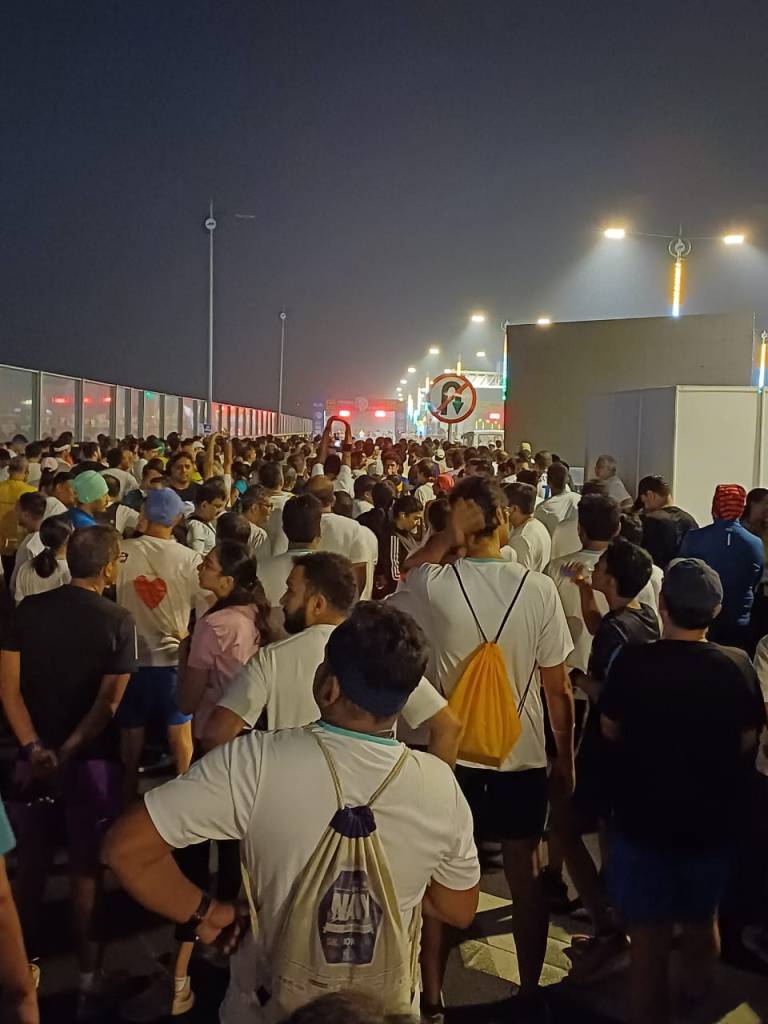
with fellow runners to be on the extreme right side of the road so that you can have your two seconds’ scream
Tiggeeeer or akshaaaayaaaa
“Why can’t they put multiple screens on the way from the scanning point to the start point/flag-off point of the race”?”
“Especially for events like Tata Mumbai Kumbh mela Half marathon where the last man/woman needs at least 20 plus minutes from the drop-off point to the flag-off point (including security lines)”
“And where are the gunshots, for gun time? “
These kinds of useless thoughts somehow sneak into my mind and I remain perplexed by my vela (as in Punjabi language) thoughts.

Maybe it is an after-effect of walking 700 meters on a huge upward-going ramp more suitable for cars rather than human feet, reaching early; and then waiting near the start line, looking at a few faces who are missing loos as if they have been tricked and have questions on the faces: did we miss the whole plot?
6.30 am and we are on roll.
As I move towards timing mats, I see the man behind the actual race management, Mr P Venkatraman, (Founder & CEO of You Too Can Run).

He is down on one side of the road cheering the runners.
“Great show sir!” I address him and he acknowledges me with a broad smile on his face.
Soon I am among many runners.
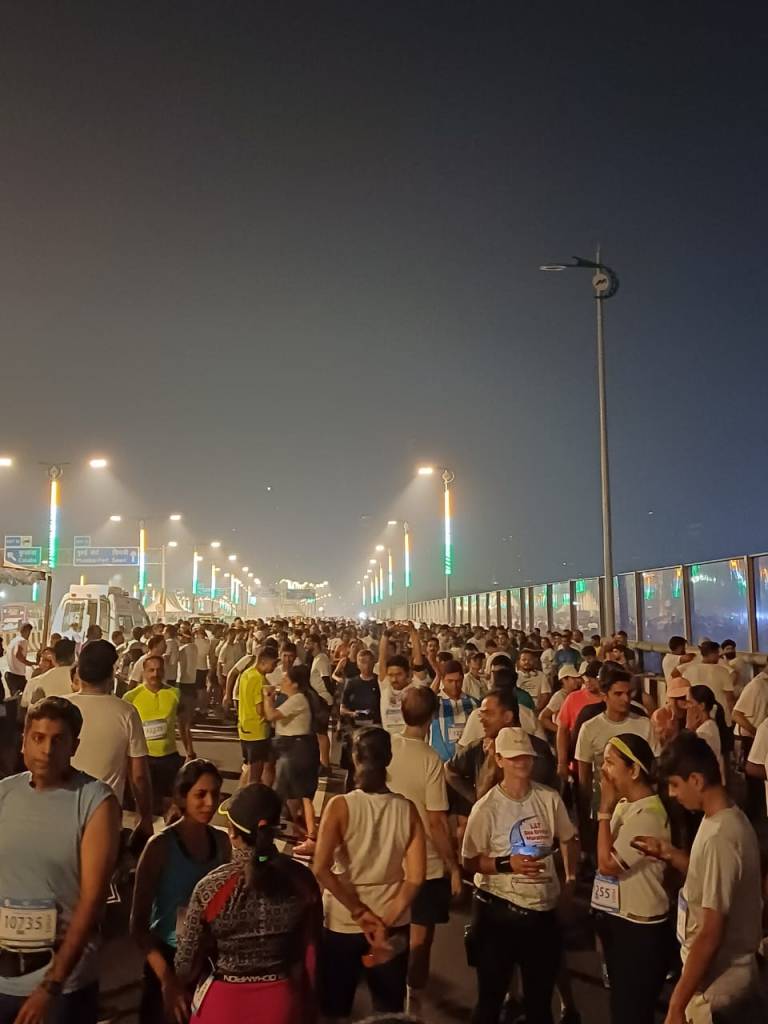
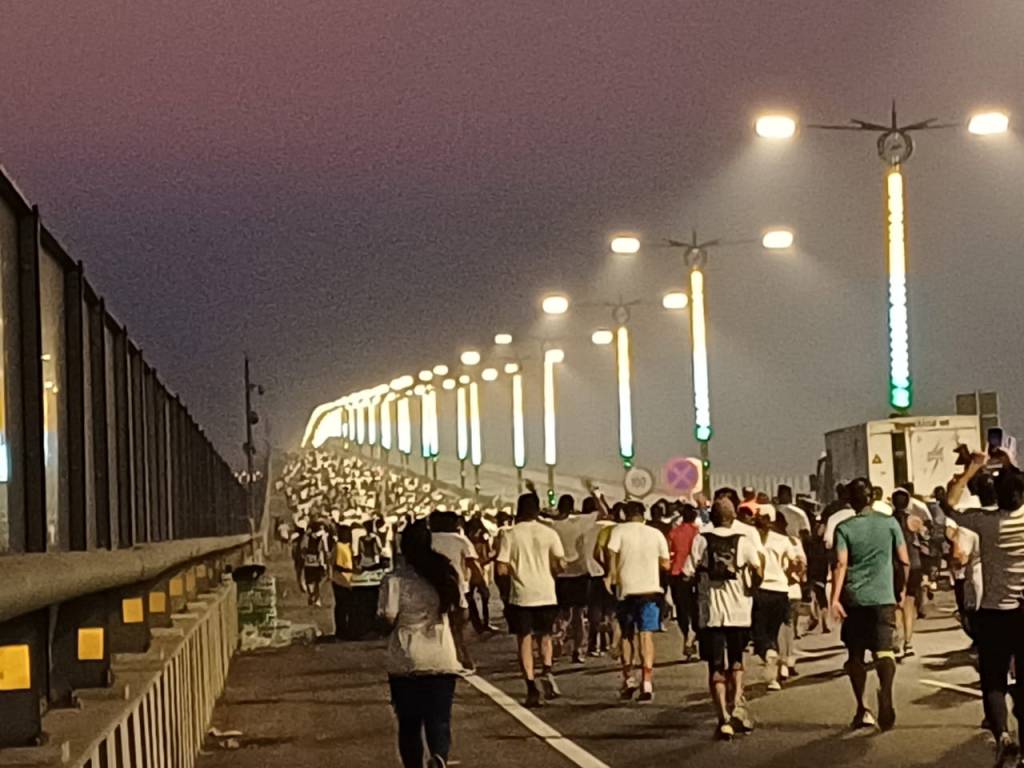
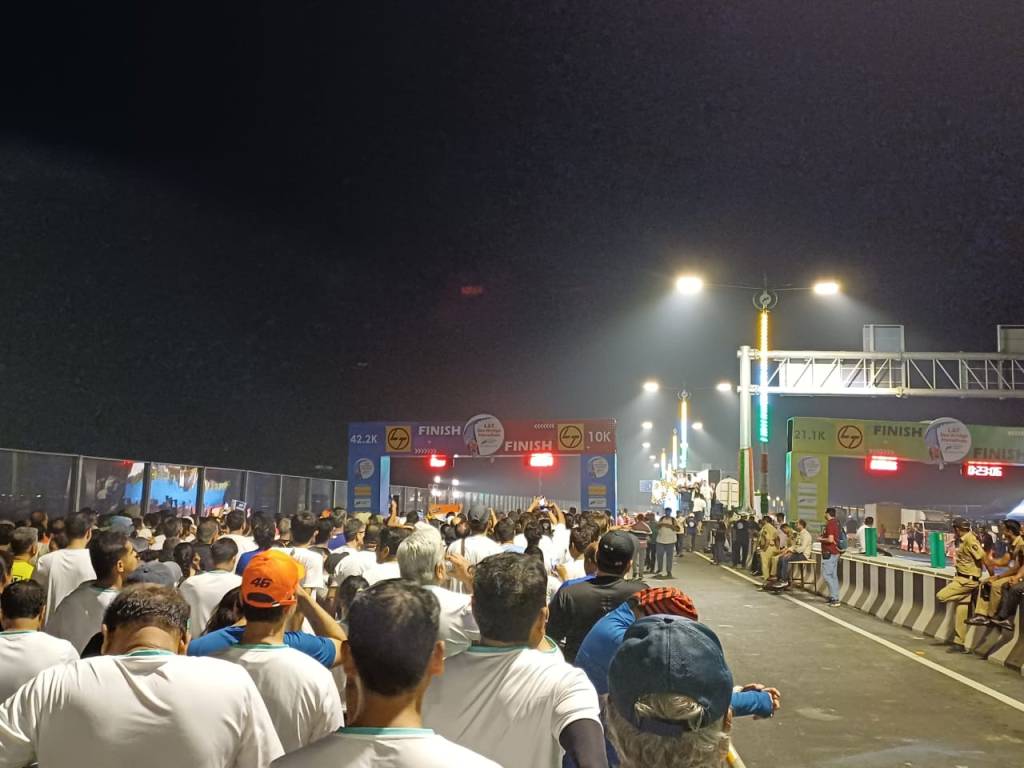
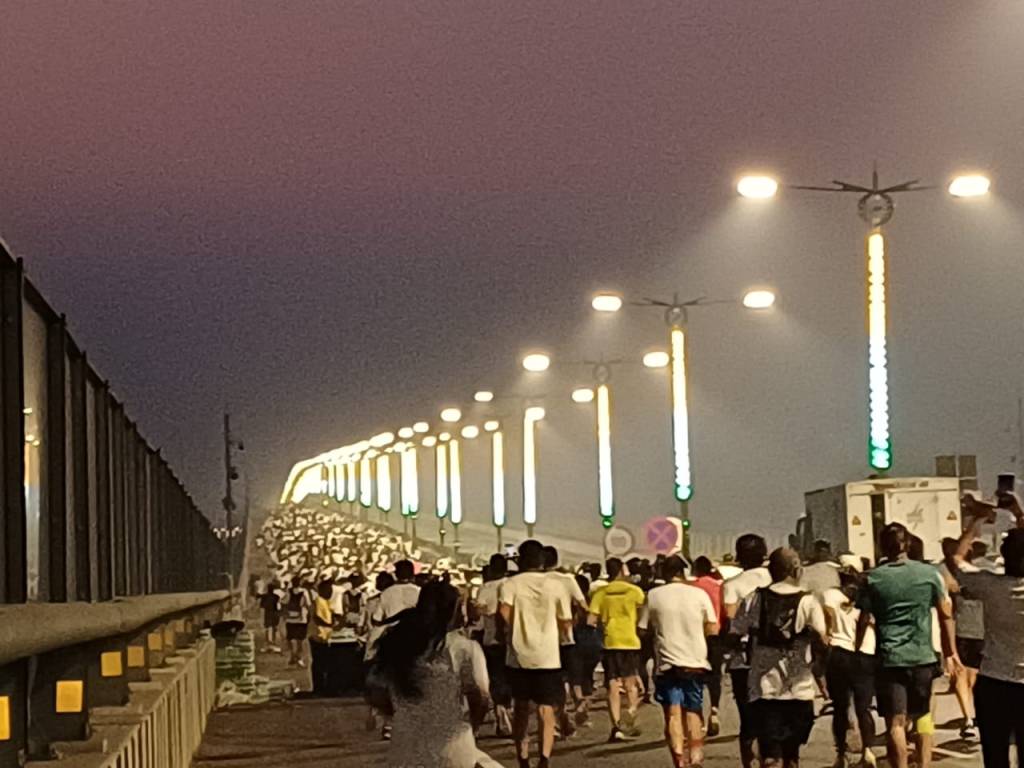
There is no breeze. I have decided to start slow and maintain a slow pace till the 2 km first walk break. Soon both the 70-minute buses, cross me and go far ahead.
We have a steep incline as the road decides to go further up as if preparing for the sea journey.
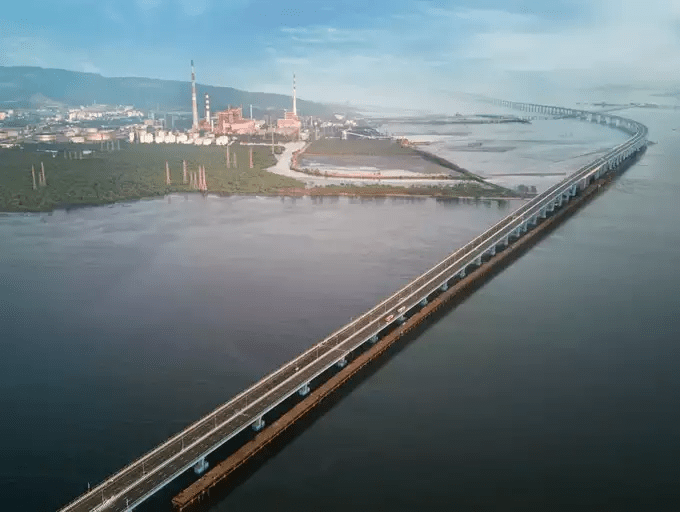
{Trivia: Nhava Sheva Sea link has a 5.5 km stretch on land mass and 16.5 km on the sea.}

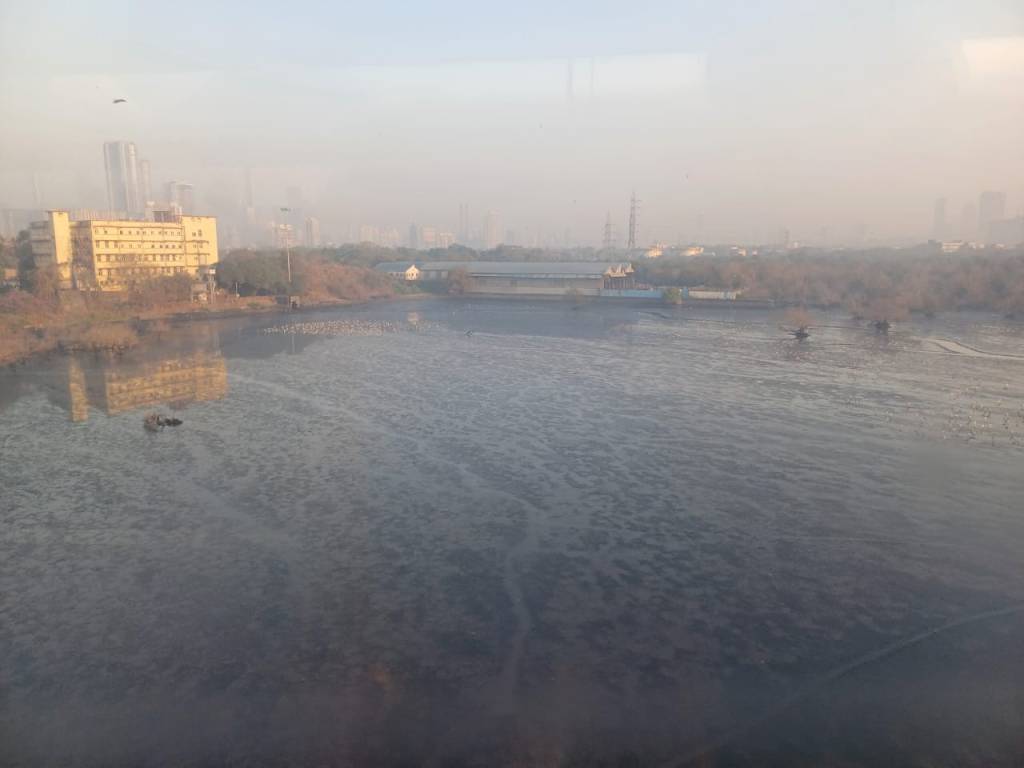
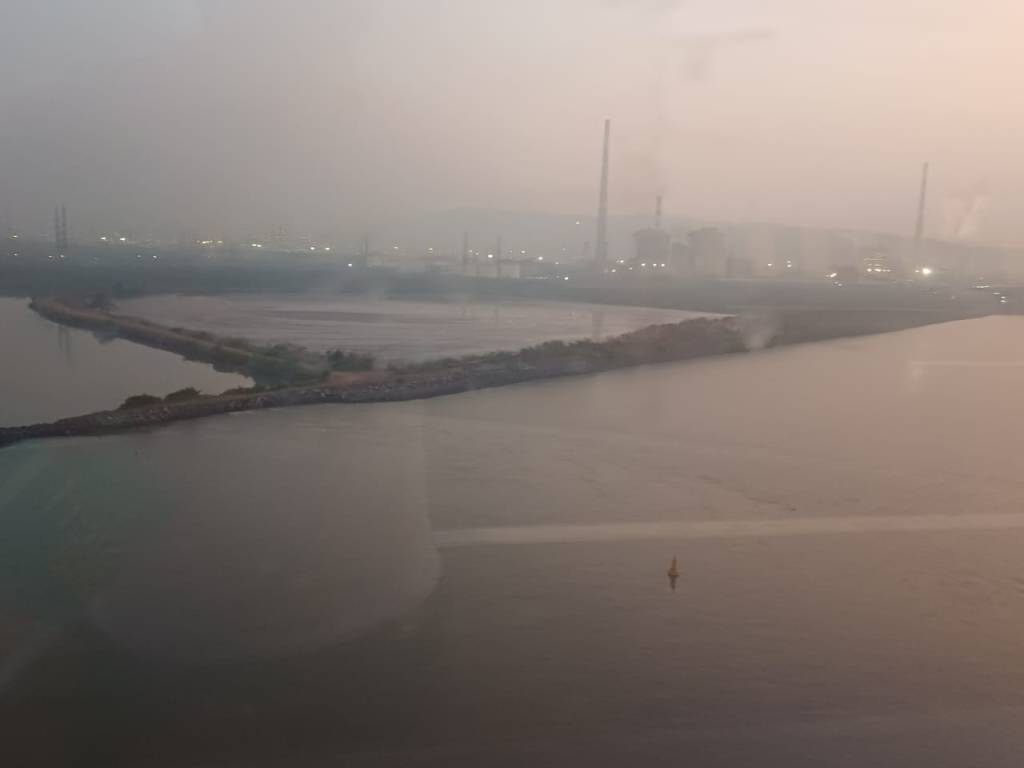
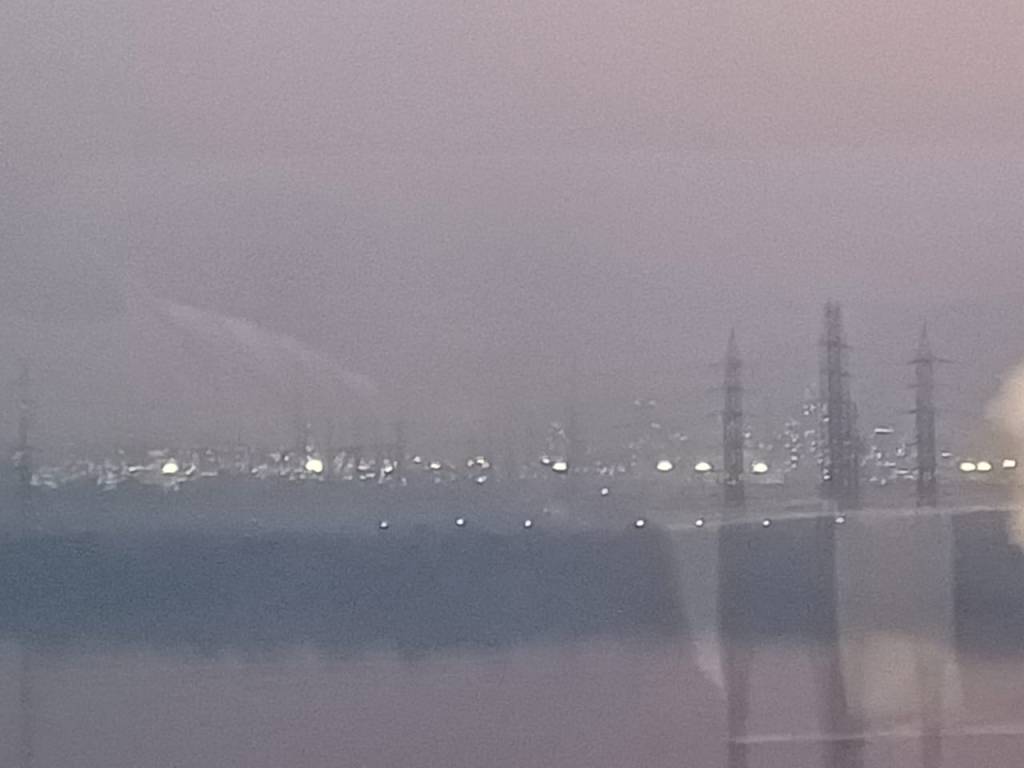

I decide not to increase my pace and keep it above 7 min/km. Only after completing the 3rd km, do I start my negative split experiment.
I have used my slow pace to click a few pictures. Taking photos at eye level may not justify this sea link run. What is needed is aerial photographs/drone photographs which can give the real feel of this wonderful event.
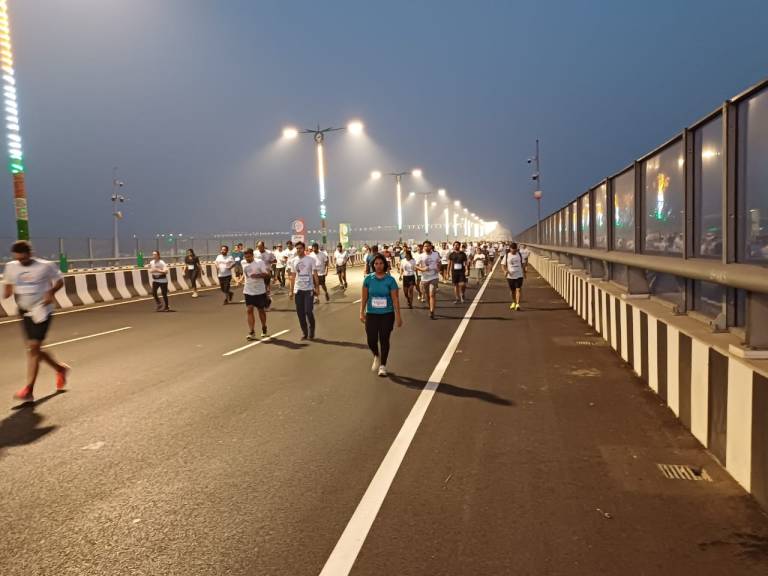
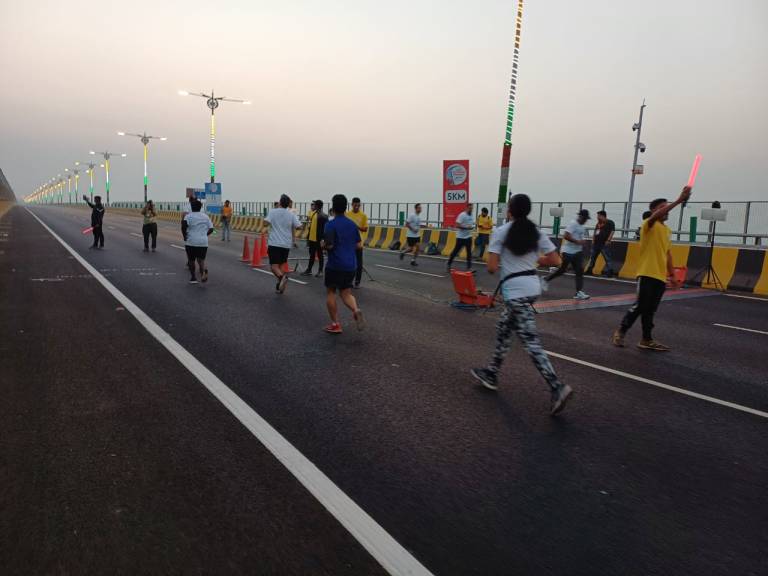

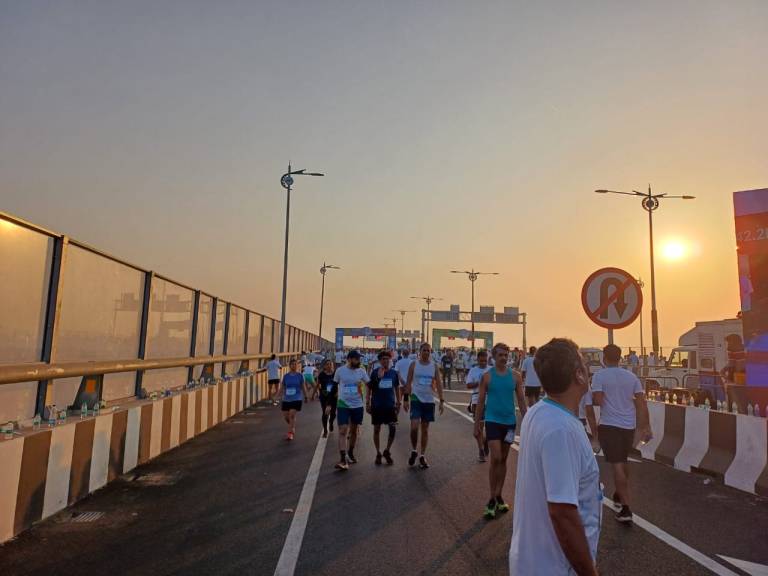
By the 5km mark, I can see and surpass the 70 min buses (both are running together and it seems they believe in a positive split i.e. run fast initially and then slow down in a later phase.) 5 km return loop is a compulsion and we all return and remain in the same lane.
There is nothing much to see. At strategic places, they have installed Noise and vision barriers.
There is no wind, but the return journey becomes more open as the fastest runners are much ahead and the remaining runners have more or less decided their finishing time, a kind of fait accompli.
To make my negative split experiment interesting I see ahead and decide on small targets
“That girl in fluorescent green T”
“That man in red T”
Break your big target into smaller achievable segments is often said by management gurus
Here I am on my dopamine trip
Every time I overtake “that girl in fluorescent T”
Or “That man in red T” I have my dopamine release.
It’s fun (and can boost your fragile ego) to overtake runners one by one.
Most newcomers make the typical newcomer mistake, rush-push in phase 1 of the race and then struggle with spent energy. They are easily identifiable.
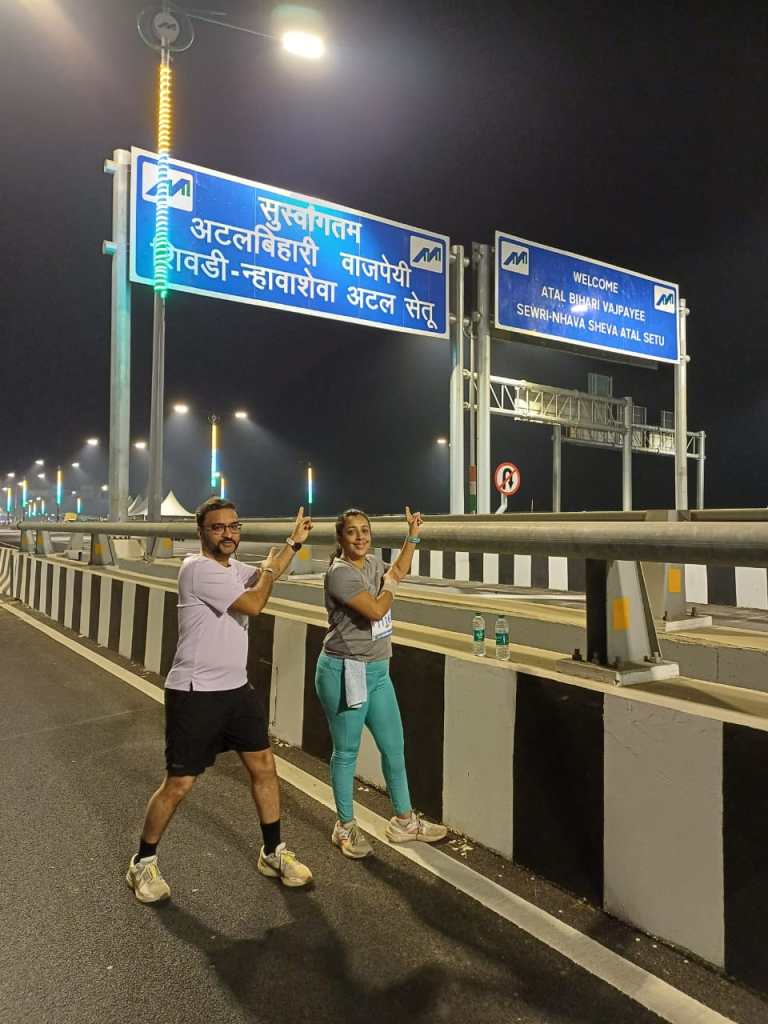
In between I take breaks to click photos of the signboards. (which affects the pace)
Last km I try to push.
My experiments with a negative split are now in 3rd race.
The first km was at 7.42 min/km, 4th km at 6.26 min/km which I could continuously raise, as my 10th km: 5.18 min/km

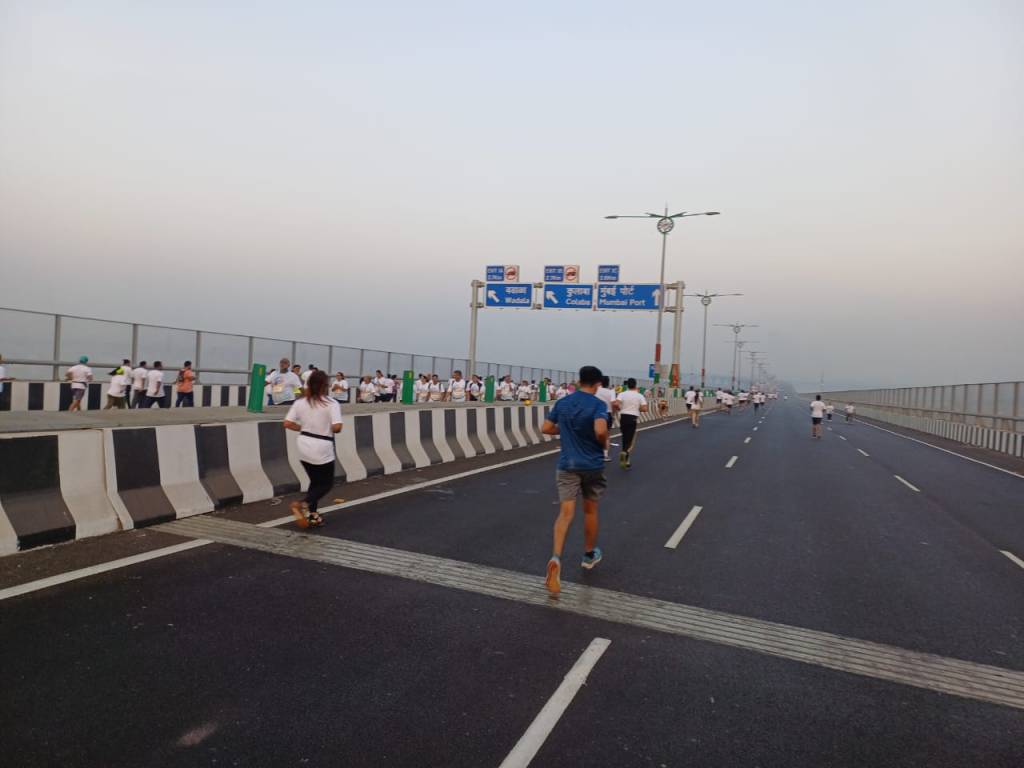
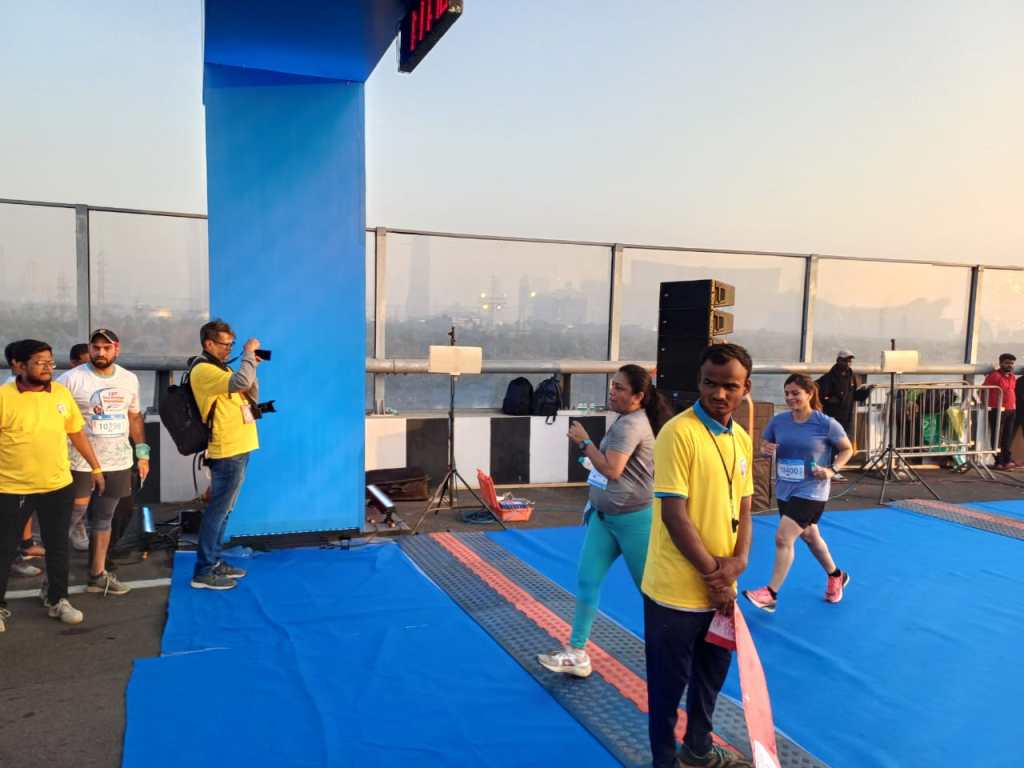
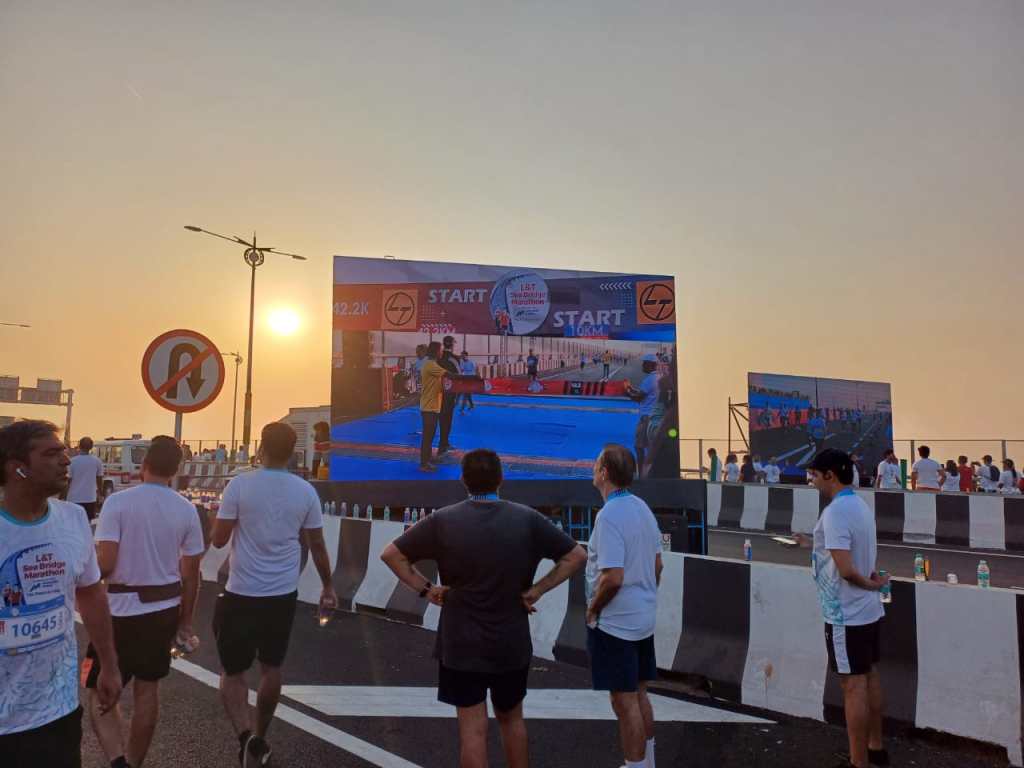
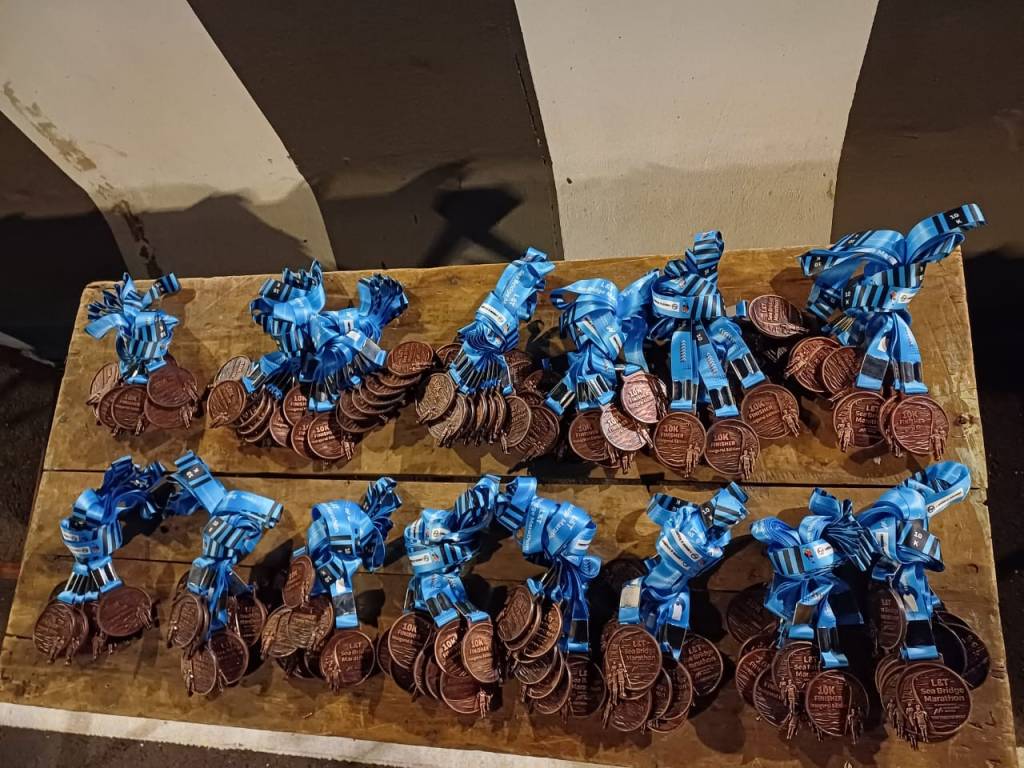
Beyond the finishing line, we have a water station, the medical help is on the other side. One has to climb the road divider if one wants to go to the other side.
It is obvious and understood that half and full-marathoners will need this facility more than 10 km gang.
The Times of India media team is conducting interviews with runners and I try my luck at asking the team member my request
“Can you help me with a few photos for this photoblog, especially a few drone photographs?”
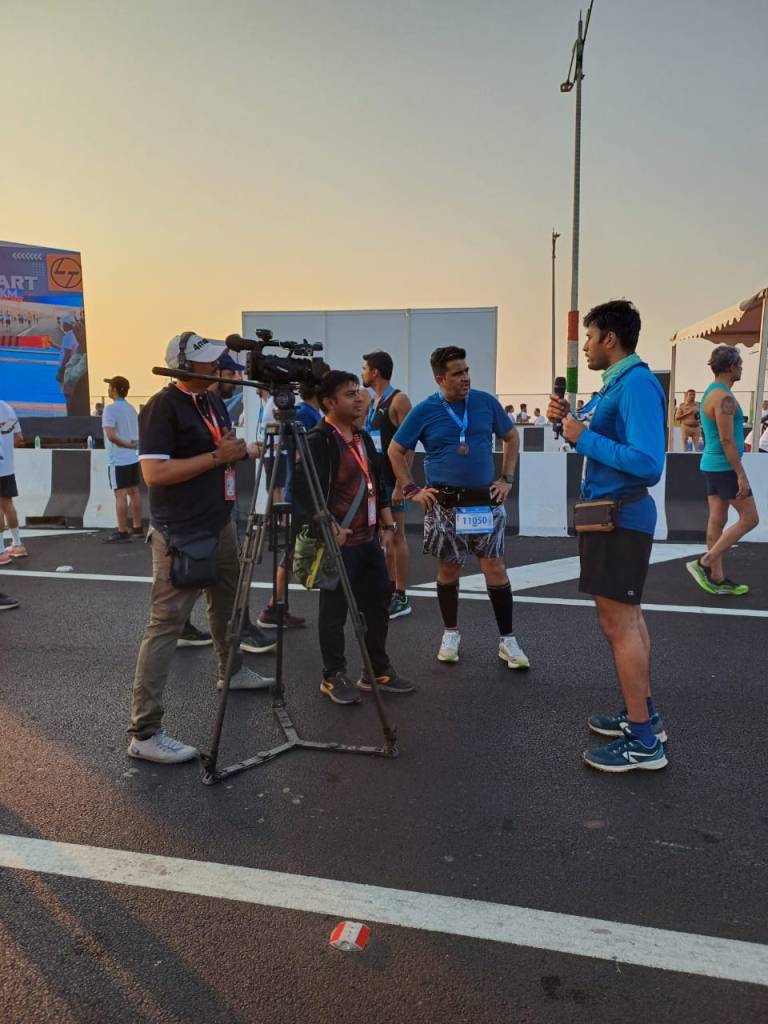
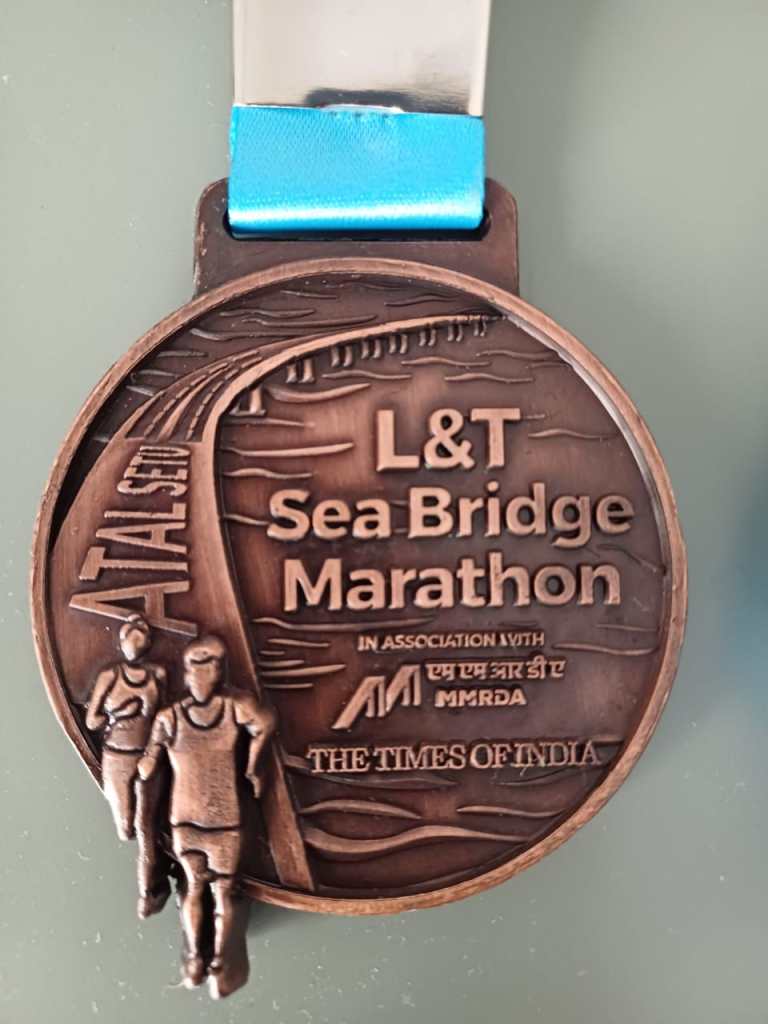
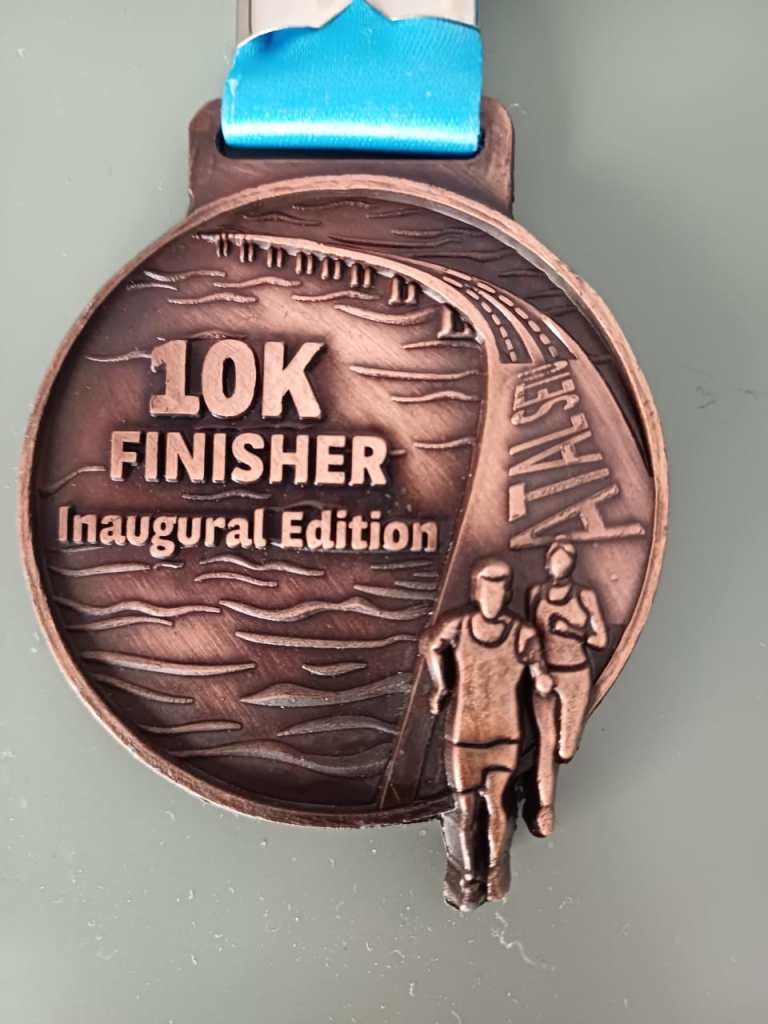
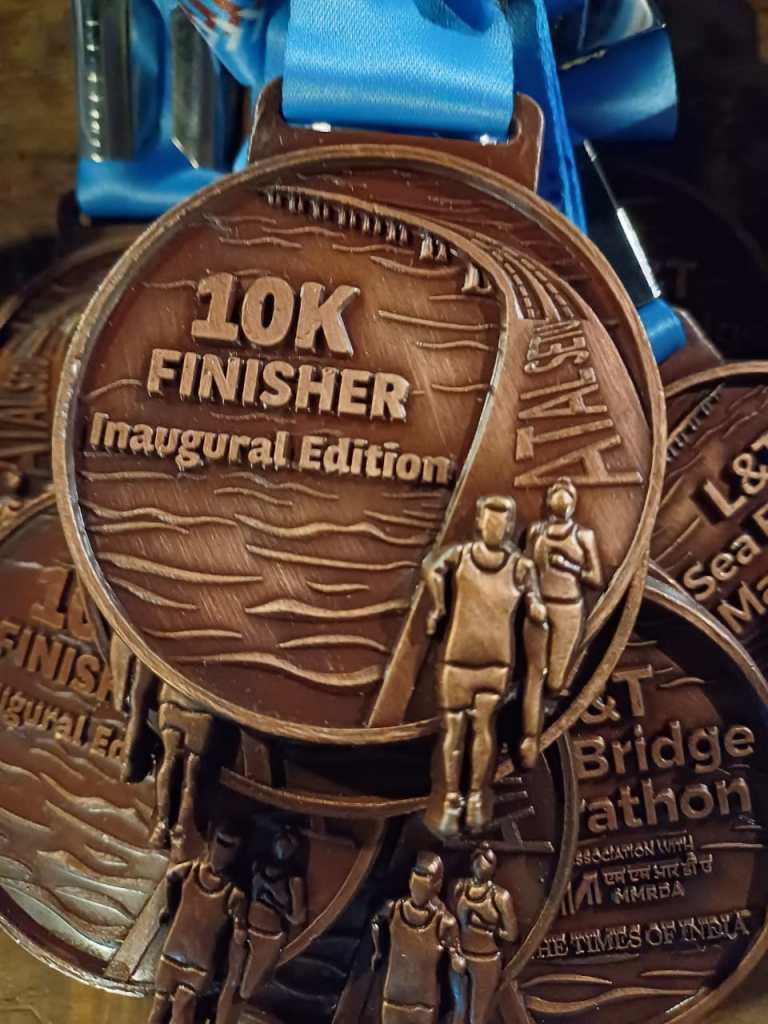
Once Sheila finishes the race, we take our finishers’ medal and walk down 700 m.

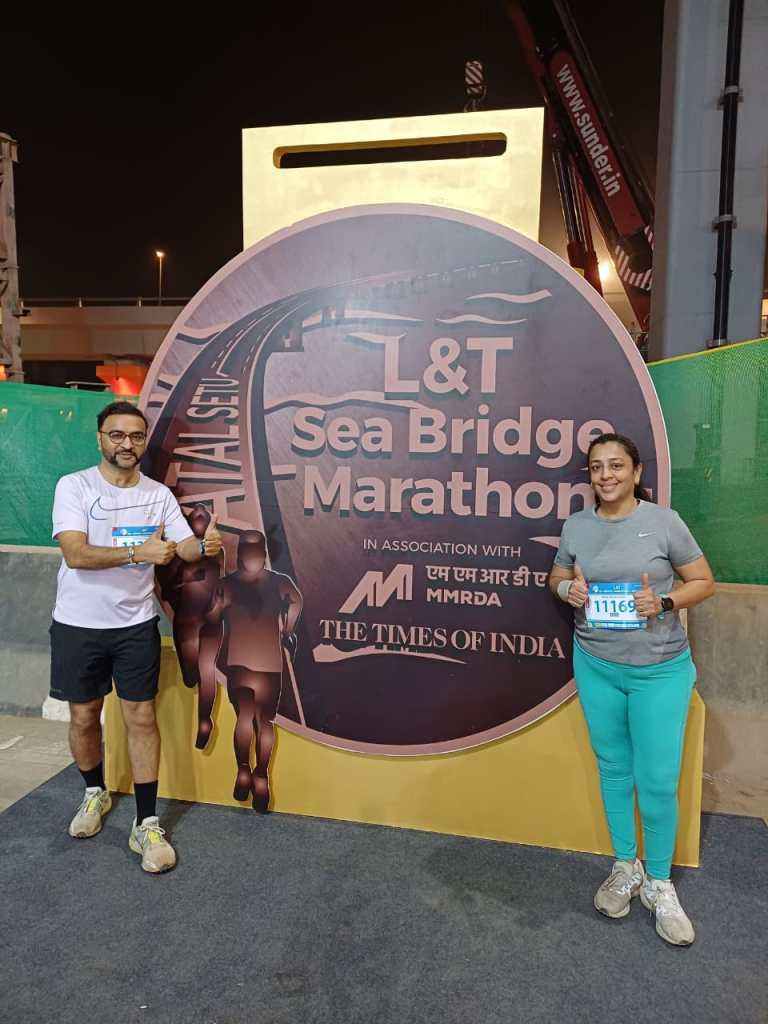
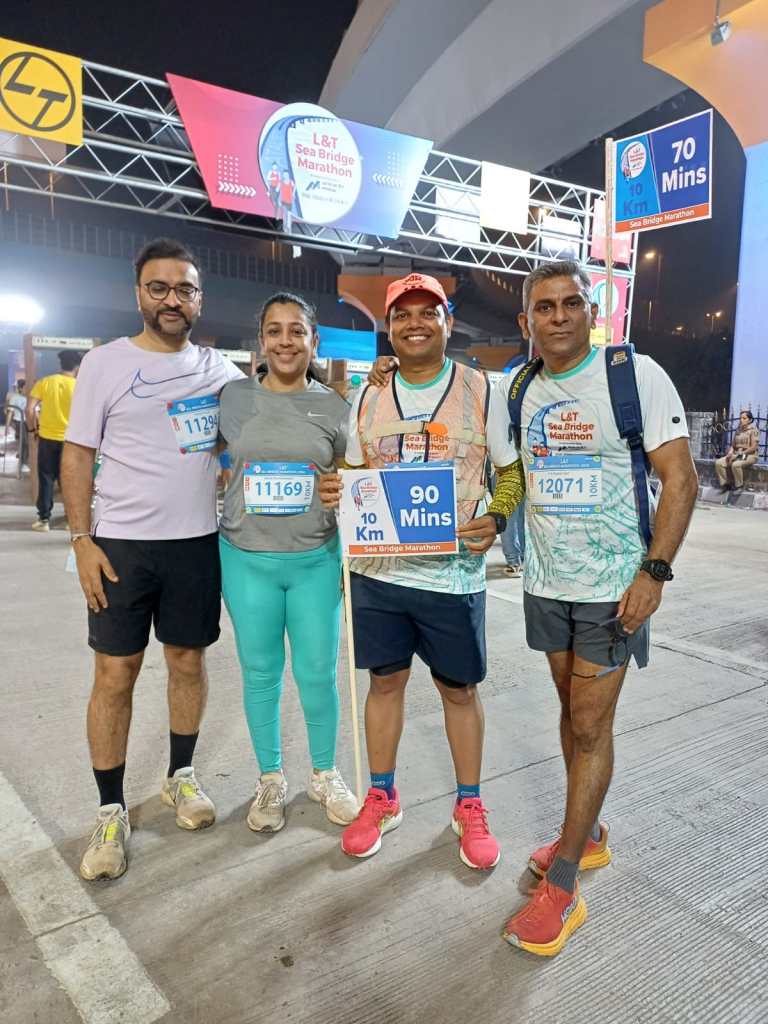
The location at the start/end point has space restrictions, so giving hot food to the runners wasn’t a feasible option. (We are given packed food).
{ some numbers: as per Times Of India newspaper report: around 4400 runners participated. The full marathon had 131 runners (121 male, 10 female). Half marathon:1029 runners (female:167). 10 km: 1109 male & 493 female. } This kind of race is really good for serious & ambitious runners, runners who meticulously plan their podium probability.
We have our made-to-order coffee at a Nagori tea joint near Shivri station and take the suburban local train back home.
This marathon was definitely interesting in the sense that for the first time, we with our tags(BIBs) got an earlier chance to use this newly built infrastructure project when compared to our cars with FASTtag. ( RFID passive tag used on Indian roads to pay toll payments).
………………………………………………………………………………………………. Happy Running….>>>>>>

 shailesh